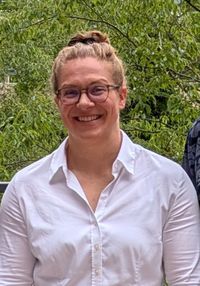
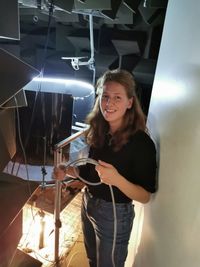
The team
Our lab is part of the Division of Neurobiology of the LMU Biology
People currently working in the lab
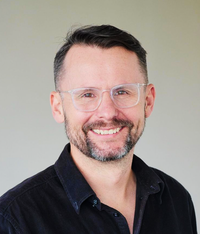

PD Dr. Michael Pecka
Position PI
I strive for a functional understanding of the neural mechanisms of auditory scene analysis. Current particular interests of the lab are spatial hearing under real-world circumstances, the role of context for predictive coding and goal-oriented behavior during active sensing, as well as studying the circuits of selective listening. A longstanding goal is to help improving the effectiveness and design of cochlear implants and other hearing aids.
.jpg/picture-200?_=178ef799168)
Andrey Sobolev, PhD
Position Postdoc
In the brain, building and maintenance of mental representations share mechanisms with spatial localization. Hearing plays a key role in spatial localization and enables to study not only the perception of complex sounds but also how this sensory modality is used in spatial encoding. The current goals are to use optogenetics to understand which areas of the brain are involved in spatial modulation in the primary auditory cortex.
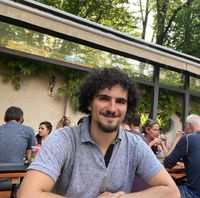
Miguel Bengala
Position PhD student
I am interested in developing quantitative behavioral analysis tools in the context of the Sensory Island Task. In my master’s thesis, I investigate state dependency during the performance of the task, correlating the animal’s behavior with data from electrophysiological recordings. Additionally, I collaborate in an ongoing project to study sound duration discrimination

Ziying Tang
Position PhD student
TangTang has secured a LMU-CSC scholarship to investigate signatures of active sensing in human subjects using EEG recordings adn the SIT paradigm.
RuoXuan Xu
Position PhD student
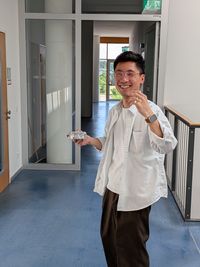
Ruoxuan has secured a CSC scholarship to join our lab. In his project he investigates the Cell-type Specific Neuro-Modulatory Circuits Orchestrate in Selective and Active Audition, focusing on how dopaminergic and cholinergic circuits influence sensory processing in the primary auditory cortex (A1) during goal-directed behavior. Utilizing the Sensory Island Task (SIT) in Mongolian gerbils, the researcher aims to map the relevant neural circuits, monitor real-time neurotransmitter dynamics, and examine the functional roles of these pathways through optogenetic and chemogenetic interventions. The study explores how internal reward predictions shape auditory scene analysis
Valentin Winhart
Position PhD student
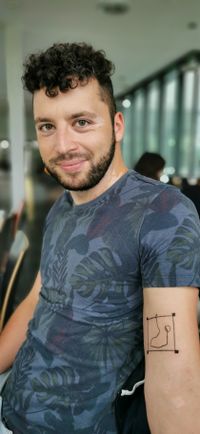
I am a trained economist turned neuroscience student. I work on developing a two-alternative forced choice paradigm in freely behaving animals to study the precedence effect. In the future, I aim to implement optogenetic manipulations during taks performance to probe the role of midbrain structures in the formation of localization dominance.


ALUMNI


Barbara Beiderbeck Ph.D.
Graduated PhD student
Now Medical Information Specialist in Newcastle upon Tyne
Dardo Ferreiro Ph.D.
Former Postdoc
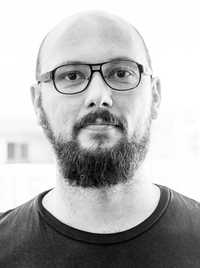
Now Assistant Professor at Universidad Torcuato Di Tella, Argentina